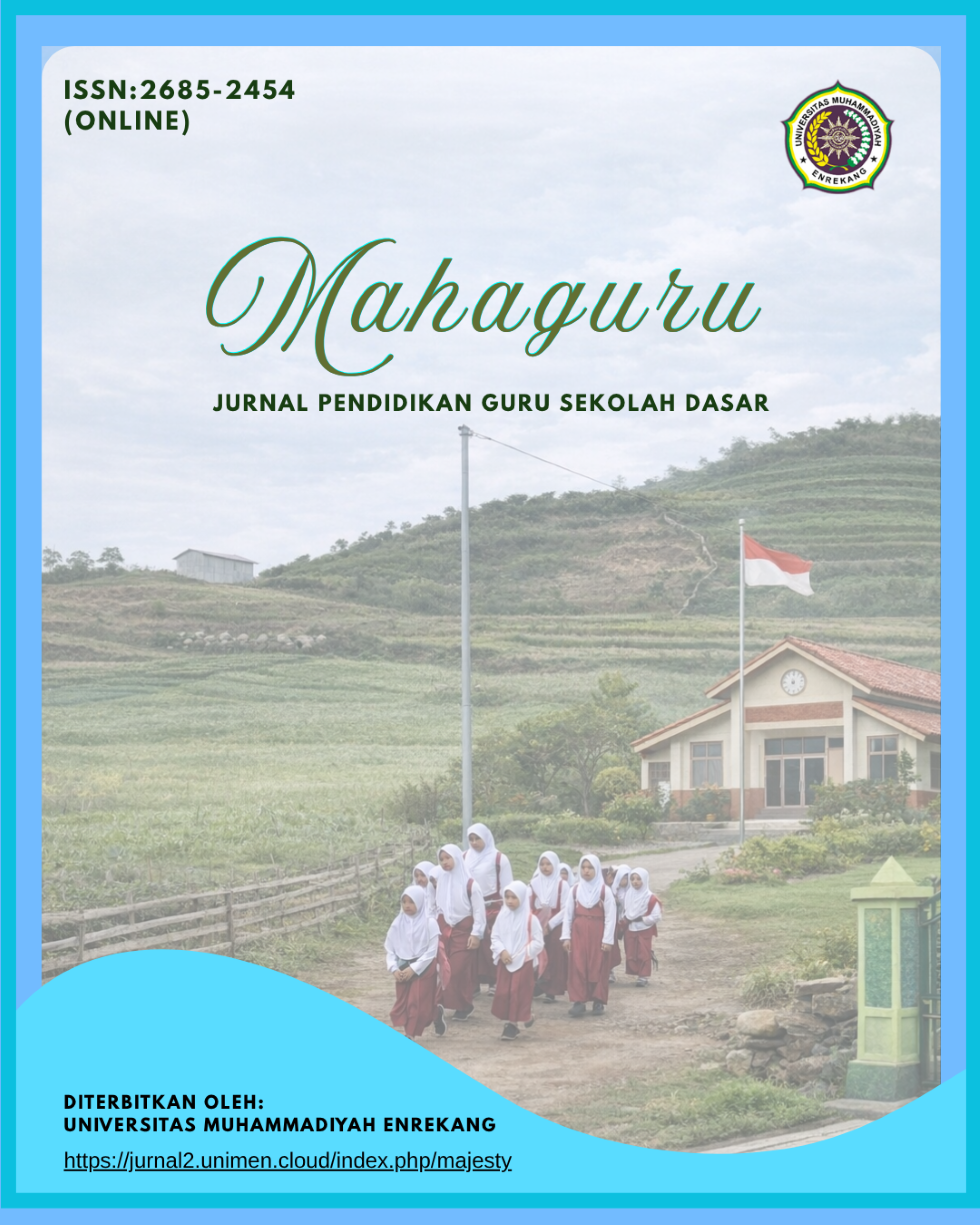
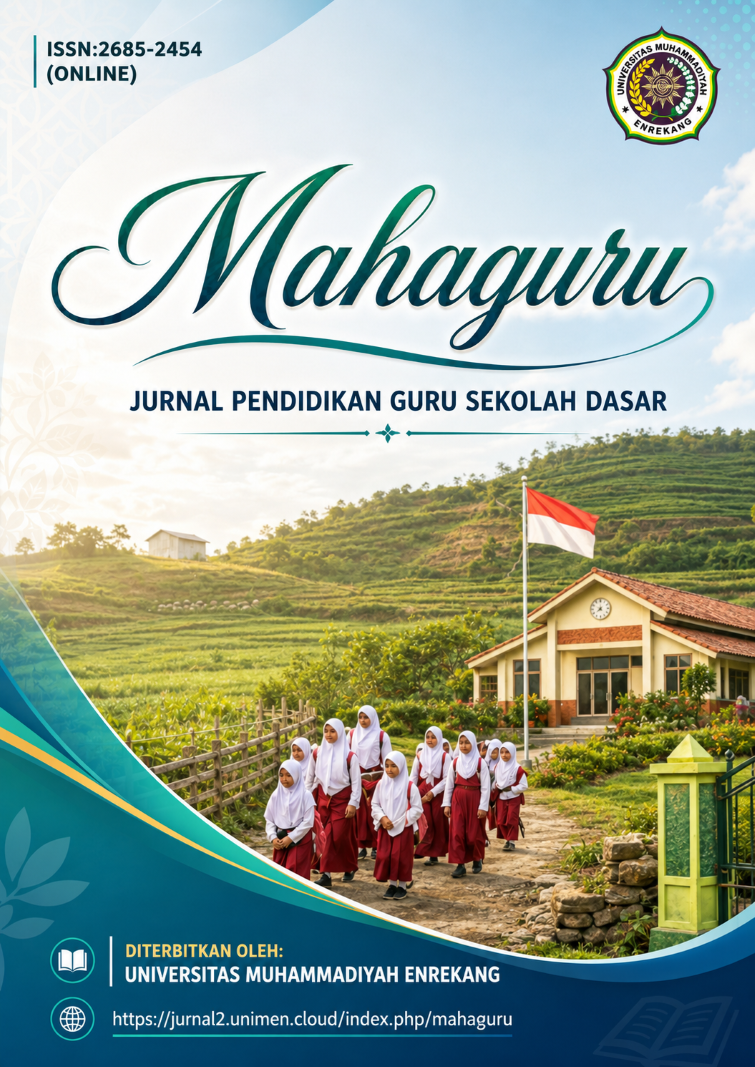
One Teacher, Multiple Grades: Pedagogical Strategies for Multigrade Teaching in Rural Elementary Schools
DOI:
https://doi.org/10.33487/mgr.v6i2.418Keywords:
Multigrade teaching, pedagogical strategies, differentiated instruction, peer tutoring, rural educationAbstract
Multigrade teaching represents an important educational strategy in schools with limited student populations and teaching personnel, yet its implementation requires adaptive pedagogical competence. This study aimed to analyze teachers’ pedagogical strategies in managing a combined Grade III and Grade IV classroom at SD Negeri 124 Jalikko, Tallu Bamba Village, Enrekang District, Indonesia. A qualitative case study design was employed. Data were collected through classroom observations, semi-structured interviews with the teacher and school principal, and document analysis, and were analyzed through data condensation, data display, and conclusion drawing. The findings revealed three major pedagogical patterns: alternating instruction, integrated learning with differentiated learning outcomes, and collaborative learning. In Indonesian language lessons, the teacher employed similar reading themes while differentiating task complexity between Grade III and Grade IV students. Independent learning activities and peer tutoring were used to maintain learning continuity while the teacher focused attention on another group. Major challenges included distributing teacher attention, managing instructional time, addressing differences in student ability, preparing learning materials, and limited learning resources. These findings indicate that successful multigrade teaching depends largely on teachers’ pedagogical flexibility in transforming classroom heterogeneity into a productive learning resource.
Downloads
Published
How to Cite
Issue
Section
License
Copyright (c) 2025 Rahmat Rahmat, Ismail Ismail, Muh. Idham Haliq, Dedi Setiawan

This work is licensed under a Creative Commons Attribution 4.0 International License.