Focus and Scope

Focus and Scope

EduPsyCouns: Journal of Education, Psychology and Counseling

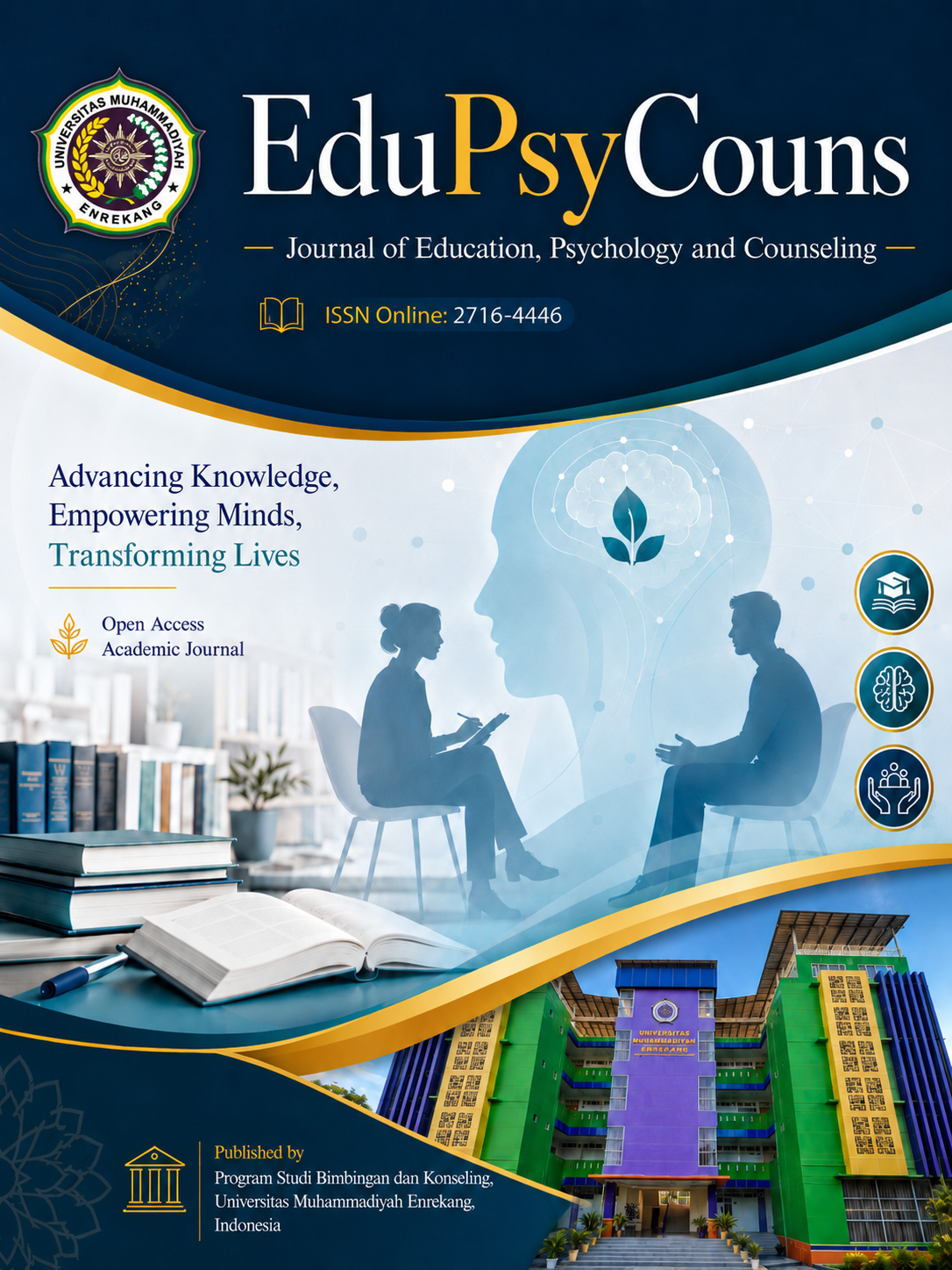
EduPsyCouns: Journal of Education, Psychology and Counseling is an open access scholarly journal dedicated to the publication of high-quality academic works in the fields of education, psychology, guidance, and counseling. The journal provides a scientific platform for researchers, lecturers, teachers, counselors, psychologists, practitioners, students, and educational stakeholders to disseminate original research, theoretical studies, literature reviews, case studies, and innovative practices that contribute to the development of educational and psychological services.

Education

Studies related to educational theories, learning processes, curriculum, assessment, educational innovation, school development, and educational policy.

Psychology

Scholarly works on educational psychology, developmental psychology, learning behavior, motivation, mental health, well-being, and psychological intervention.

Guidance and Counseling

Research and practice in school counseling, personal guidance, academic guidance, social guidance, career counseling, family counseling, and spiritual counseling.

1. Journal Focus

EduPsyCouns focuses on the advancement of scientific knowledge and professional practice in education, psychology, guidance, and counseling. The journal welcomes manuscripts that examine educational and psychological issues through empirical research, theoretical analysis, reflective inquiry, program evaluation, intervention studies, and interdisciplinary perspectives.

The journal is particularly interested in studies that address contemporary challenges in educational institutions, counseling services, learner development, psychological well-being, school climate, character education, social-emotional learning, mental health promotion, and inclusive educational practices.

Through its publication, EduPsyCouns aims to strengthen the relationship between theory, research, and practice in order to improve educational quality, counseling effectiveness, psychological support, and human development in diverse educational and social contexts.

2. Scope of Education Studies

The journal accepts manuscripts related to educational studies, including but not limited to:

  • Educational theory, philosophy, and policy;
  • Curriculum development and instructional design;
  • Learning strategies, learning models, and classroom innovation;
  • Educational assessment, evaluation, and measurement;
  • Character education and values-based education;
  • Inclusive education and special needs education;
  • Educational technology and digital learning;
  • School leadership and educational management;
  • Teacher professional development;
  • Community-based education and lifelong learning.
3. Scope of Psychology Studies

EduPsyCouns welcomes studies in psychology that are relevant to education, human development, learning, behavior, and psychological well-being. The scope includes:

  • Educational psychology;
  • Developmental psychology;
  • Learning motivation and student engagement;
  • Mental health and psychological well-being;
  • Self-regulation, resilience, and emotional development;
  • Behavioral problems and intervention strategies;
  • Psychological assessment in educational settings;
  • Positive psychology in schools and communities;
  • Student identity, self-concept, and social adjustment.
4. Scope of Guidance and Counseling

The journal provides a scholarly space for manuscripts in guidance and counseling, including theoretical, empirical, and practical contributions. Relevant topics include:

  • School guidance and counseling programs;
  • Personal, academic, social, and career guidance;
  • Individual counseling and group counseling;
  • Career counseling and career development;
  • Family counseling and community counseling;
  • Spiritual counseling and religious-based counseling;
  • Multicultural counseling and cross-cultural issues;
  • Counseling intervention, prevention, and psychoeducation;
  • Crisis counseling, trauma-informed counseling, and restorative practices;
  • Professional competence and ethics in counseling.
5. Interdisciplinary and Contemporary Issues

EduPsyCouns also welcomes interdisciplinary manuscripts that connect education, psychology, counseling, sociology, culture, technology, religion, and community development. Contemporary topics may include:

  • Social-emotional learning and student well-being;
  • Restorative practices and school discipline reform;
  • Bullying prevention and safe school climate;
  • Digital counseling and online psychological services;
  • Artificial intelligence in education and counseling;
  • Multicultural education and inclusive counseling;
  • Mental health literacy in schools and communities;
  • Gender, identity, and psychosocial development;
  • Community empowerment through education and counseling services.
6. Accepted Article Types

The journal accepts several types of scholarly manuscripts, including:

Research Articles

Review Articles

Conceptual Papers

Case Studies

Program Evaluation

Innovative Practice Reports

7. Target Contributors and Readers

EduPsyCouns is intended for a broad academic and professional audience, including:

  • Researchers and academics in education, psychology, guidance, and counseling;
  • School counselors, teachers, lecturers, and educational practitioners;
  • Psychologists, counseling practitioners, and mental health professionals;
  • Undergraduate, master’s, and doctoral students;
  • Educational policymakers, school leaders, and community development actors;
  • Professional associations and institutions concerned with education, psychology, and counseling services.
8. Manuscripts Outside the Scope

Manuscripts may be declined during the initial editorial screening if they do not fit the journal’s scope, lack academic contribution, do not follow the author guidelines, or do not meet basic standards of scholarly writing and publication ethics.

Submissions that are purely opinion-based without clear scholarly grounding, contain excessive similarity, lack methodological clarity, or are unrelated to education, psychology, guidance, and counseling will not be considered for peer review.